

Education Topics
We're not a black box.
Why does Tesorai find more peptides?
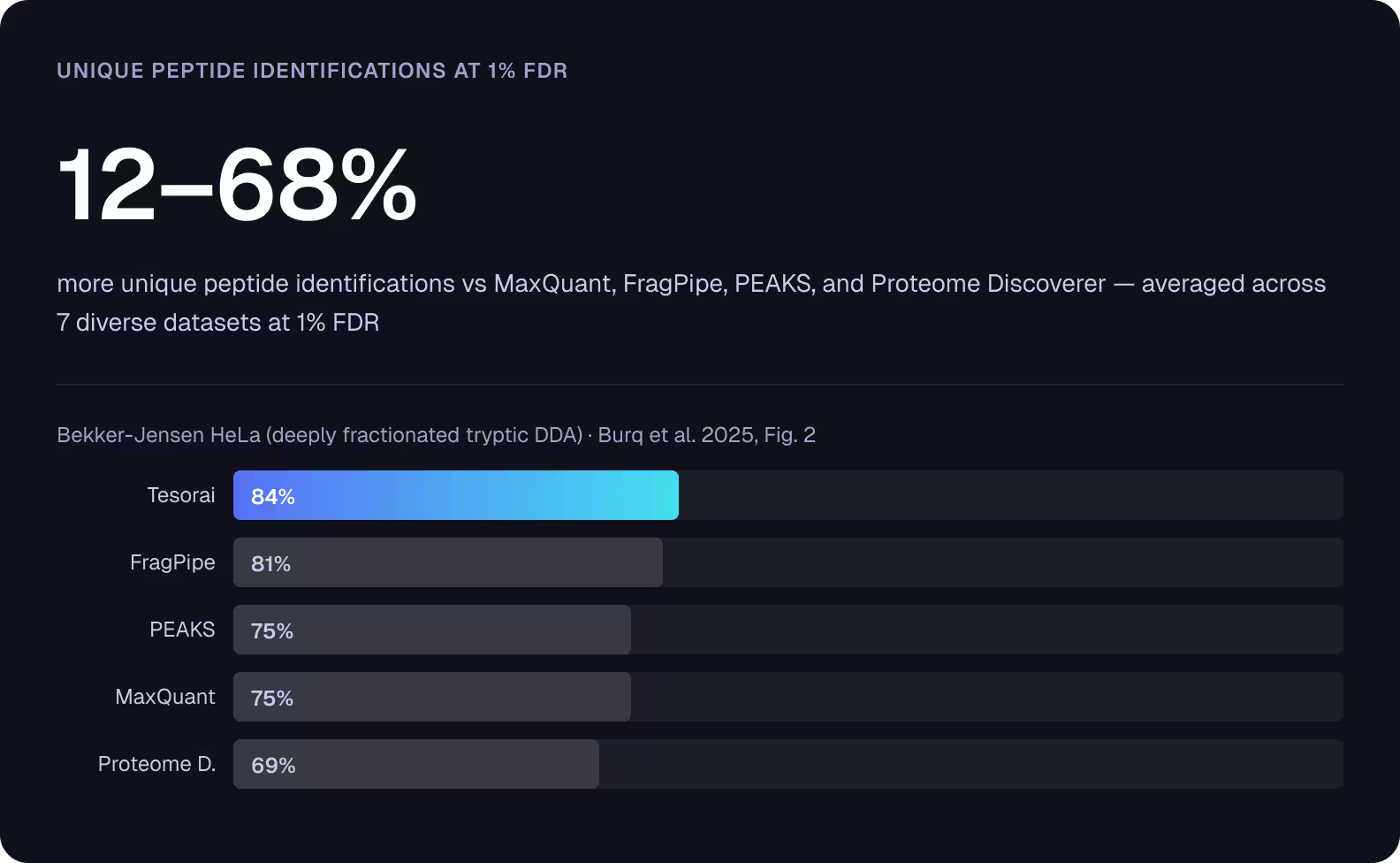
A better score — not a looser threshold — is what produces more peptide identifications at the same FDR.
When a mass spectrometer analyzes a protein sample, it generates thousands of fragmentation spectra — each one a fingerprint of a peptide. The job of a search engine is to match each spectrum to the right peptide sequence. Do that well, and you find more real peptides. Do it poorly, and you miss them.
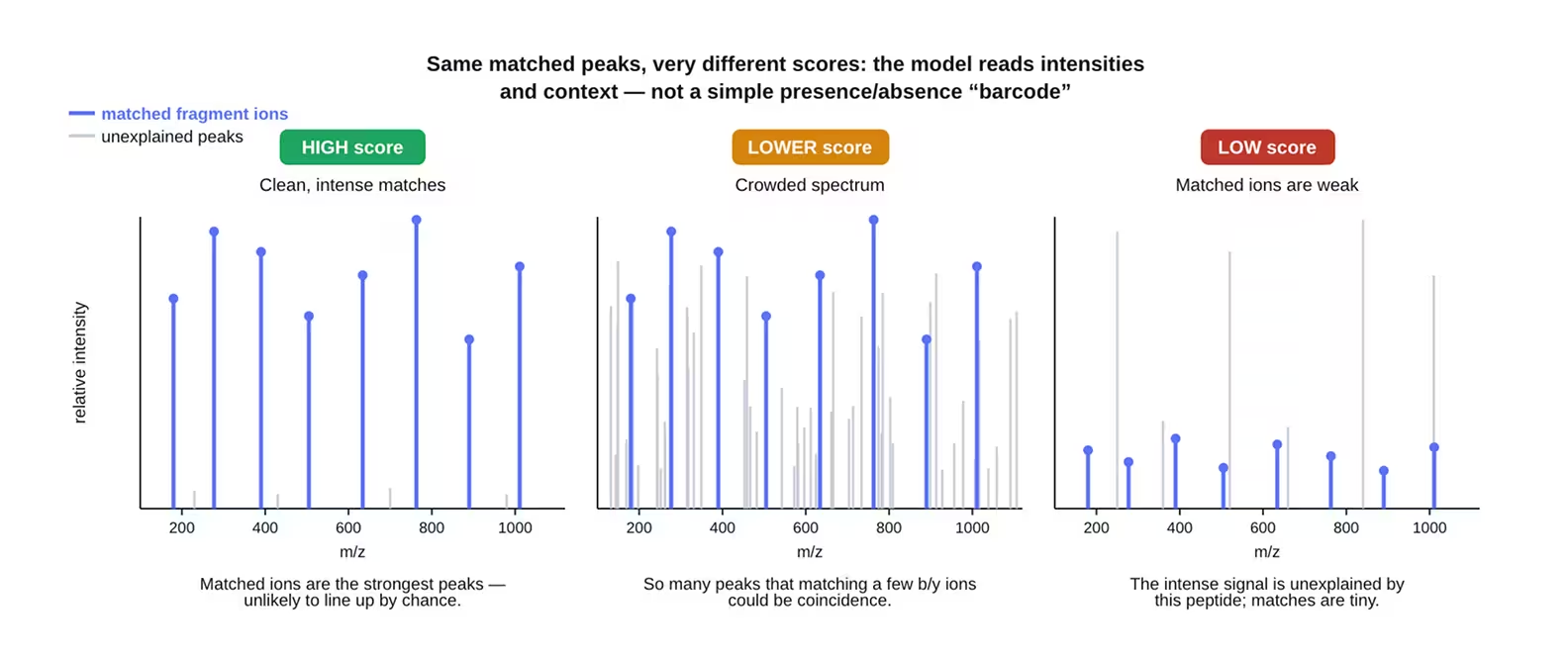
Most search engines approach this matching the same way: they look for a handful of expected fragment ions — the textbook b- and y-ions — and score how many show up. It works, but it throws away most of the information in the spectrum.
Tesorai Search takes a different approach. Instead of looking for a fixed set of fragments, a single model reads the entire spectrum — every peak, every intensity — alongside the candidate peptide sequence, and asks one question: does this spectrum genuinely come from this peptide?
Trained on 289 million peptide-spectrum matches from 16,000 LC-MS/MS runs — and never retrained on the data being analyzed, which eliminates the risk of overfitting.
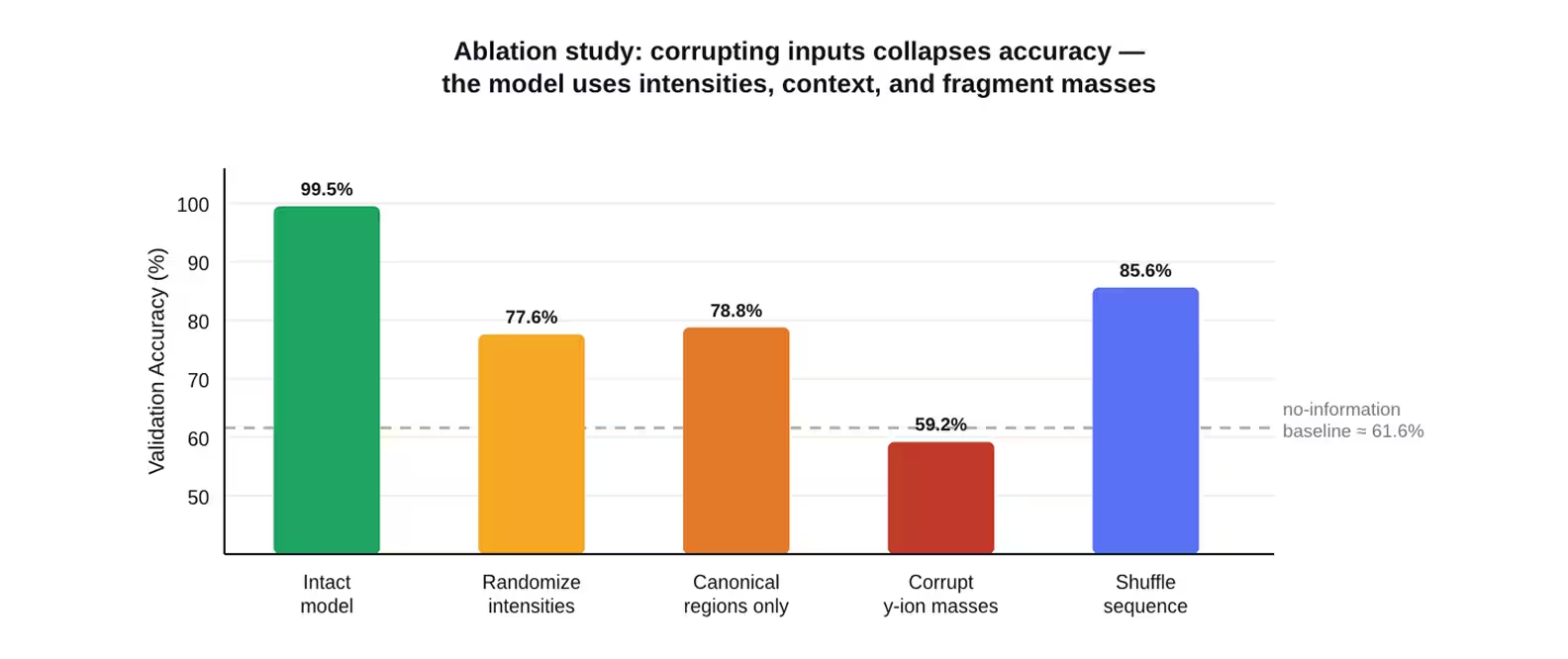
The result is a score that separates correct from incorrect matches more cleanly than classical approaches. When we corrupted specific inputs — randomizing peak intensities, removing non-textbook peaks, scrambling fragment masses — accuracy collapsed. The model is reading real spectral chemistry, not memorizing sequences.
Full technical post: One model, one score
How is FDR controlled?
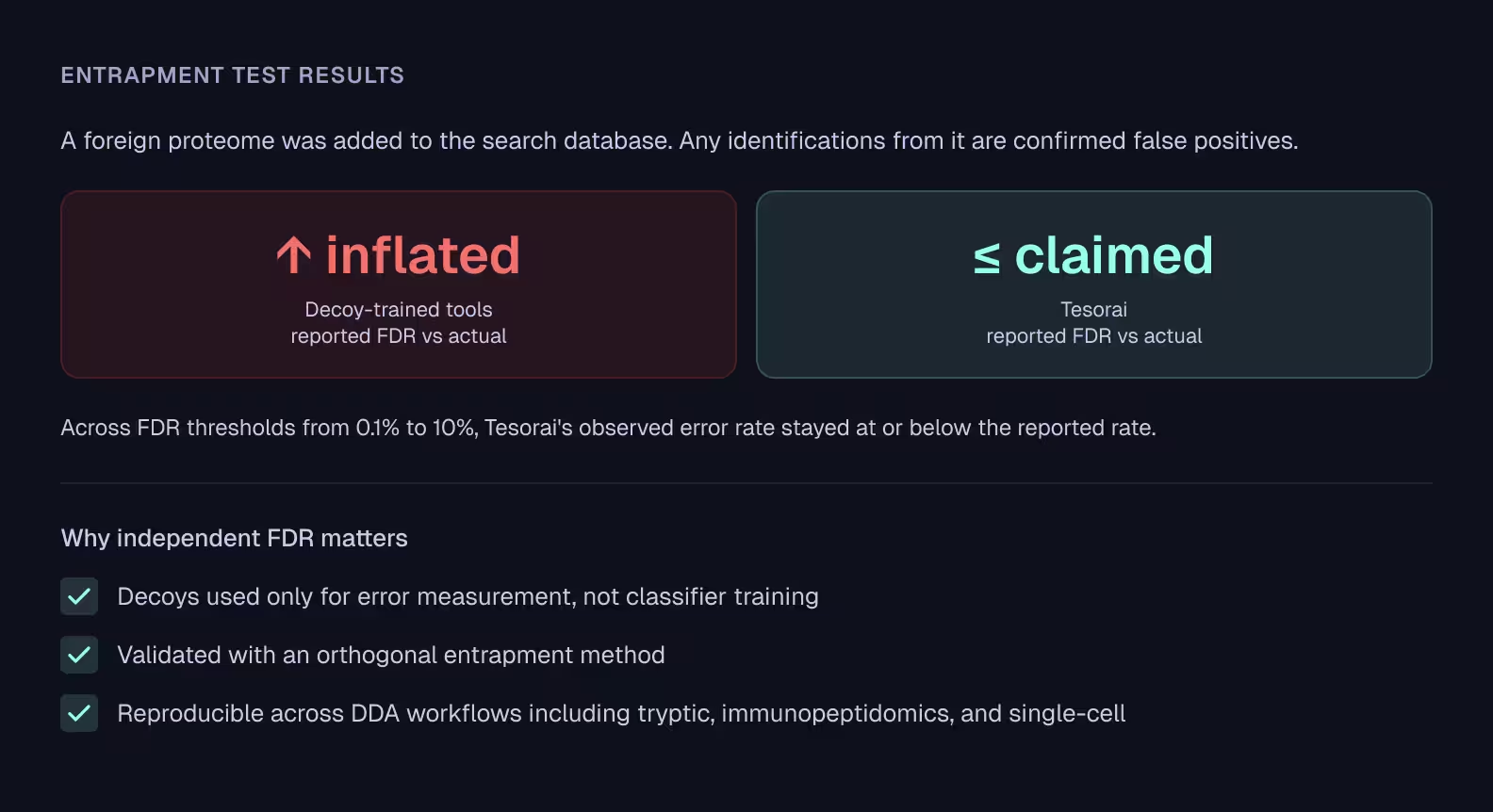
When Tesorai says 1% FDR, the observed error rate is no worse than 1%. Here's how we know.
More identifications only mean something if the error rate is what it claims to be. The standard way to measure error in proteomics is the false discovery rate (FDR) — and the standard tool is a set of decoy sequences: fake proteins that cannot be correct matches. Count how many decoys pass your threshold, and you estimate how many real matches are wrong.
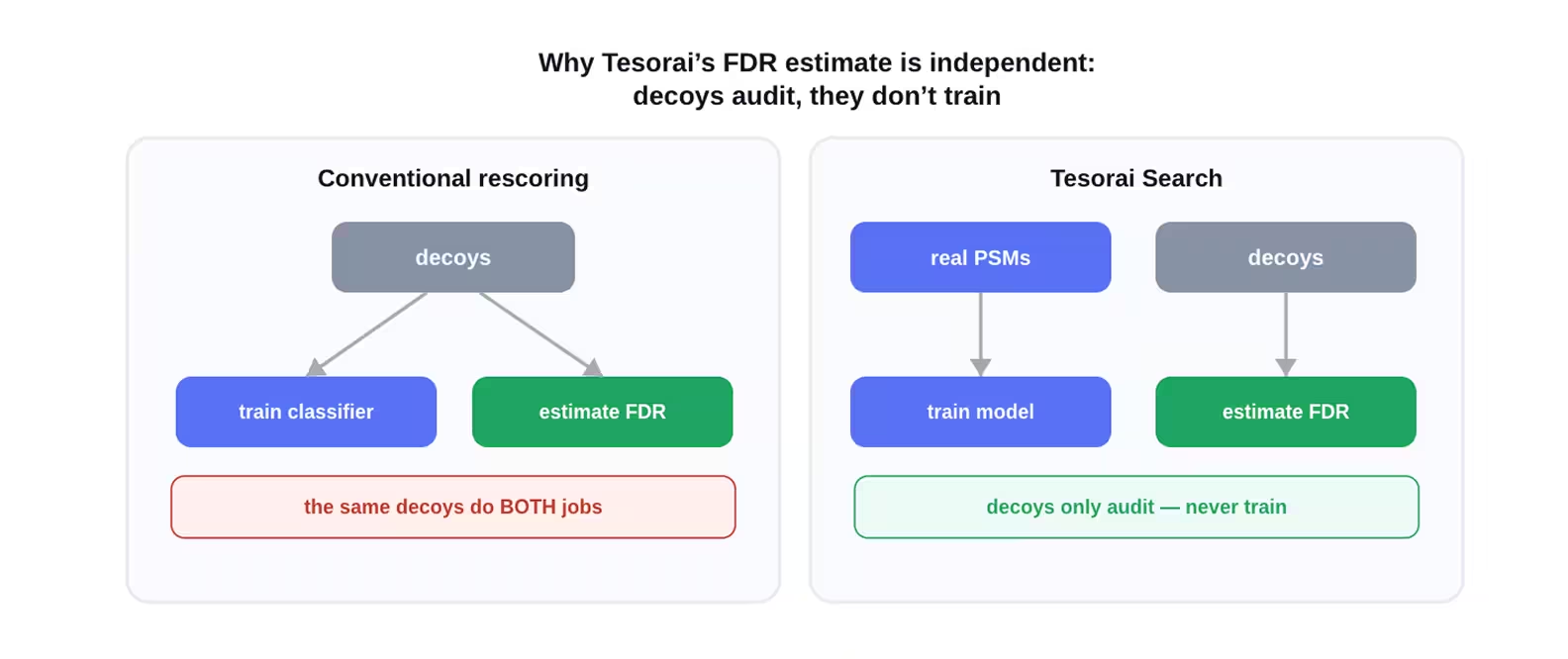
That's the theory. The practice gets complicated. Most modern search tools use a second-stage classifier to boost identification rates. To train that classifier, they use decoy sequences as examples of wrong matches. So the same decoys end up doing two jobs: training the classifier, and measuring the error rate.
This is a problem. A model trained to recognize decoys can learn the quirks of how decoys are constructed — reversed protein sequences have particular patterns. When those same decoys then measure the FDR, the estimate is no longer independent. The reported error rate can be lower than the true rate.
Tesorai's model was trained without decoys. Its training examples are real peptide-spectrum matches, both correct and incorrect. Decoys play no role in training — so when they measure FDR, they're doing one job only.
We then validated this with an entrapment test: we searched a sample of known composition against a database padded with a foreign proteome that cannot legitimately be present. Any identification from that foreign proteome is a real false positive, by construction. Across FDR thresholds from 0.1% to 10%, the measured error rate stayed at or below what we claimed.
Full technical post: More identifications, honest error rates
Do you use match-between-runs?
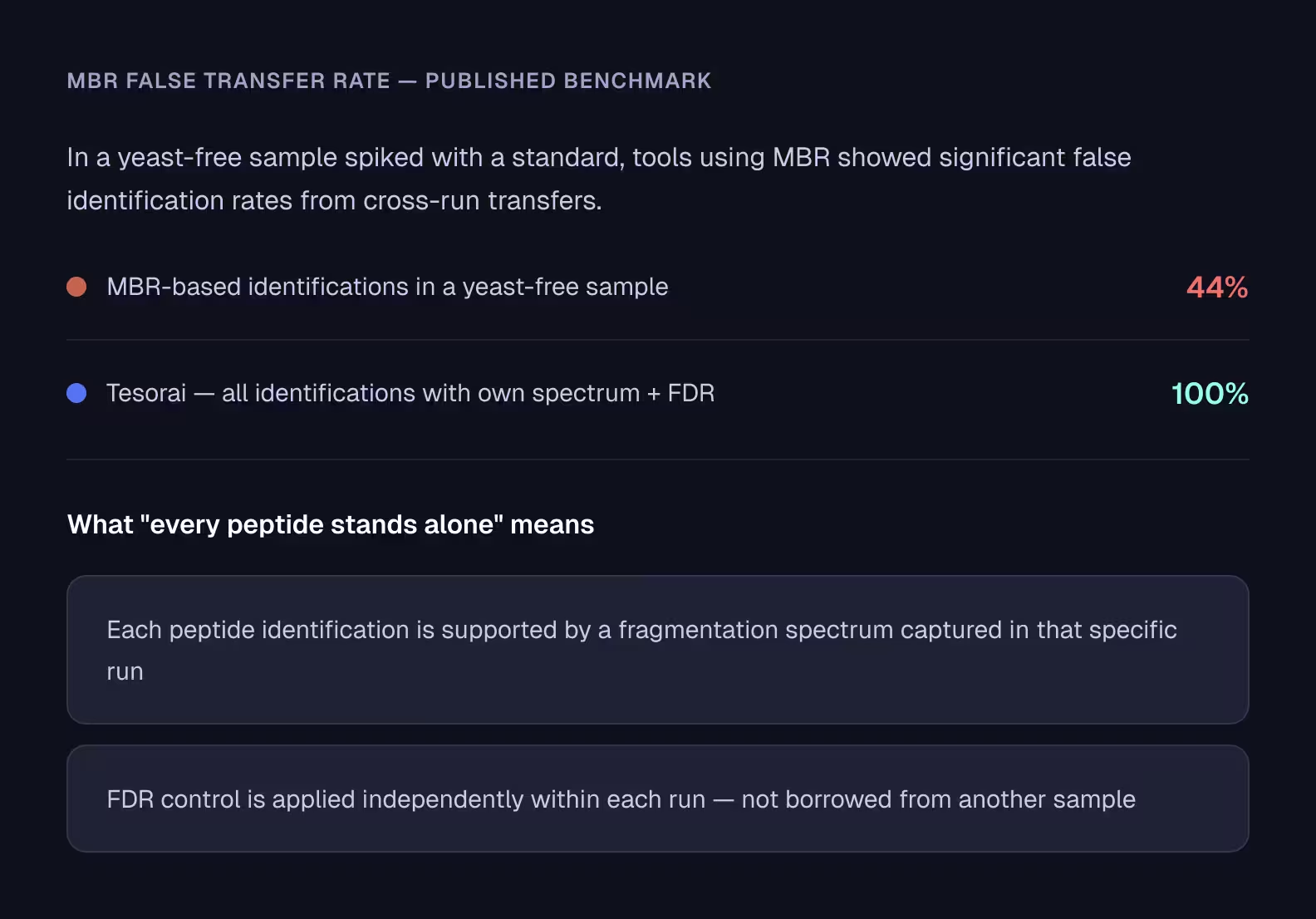
No. Every peptide Tesorai reports is backed by its own spectrum and its own FDR control in that run.
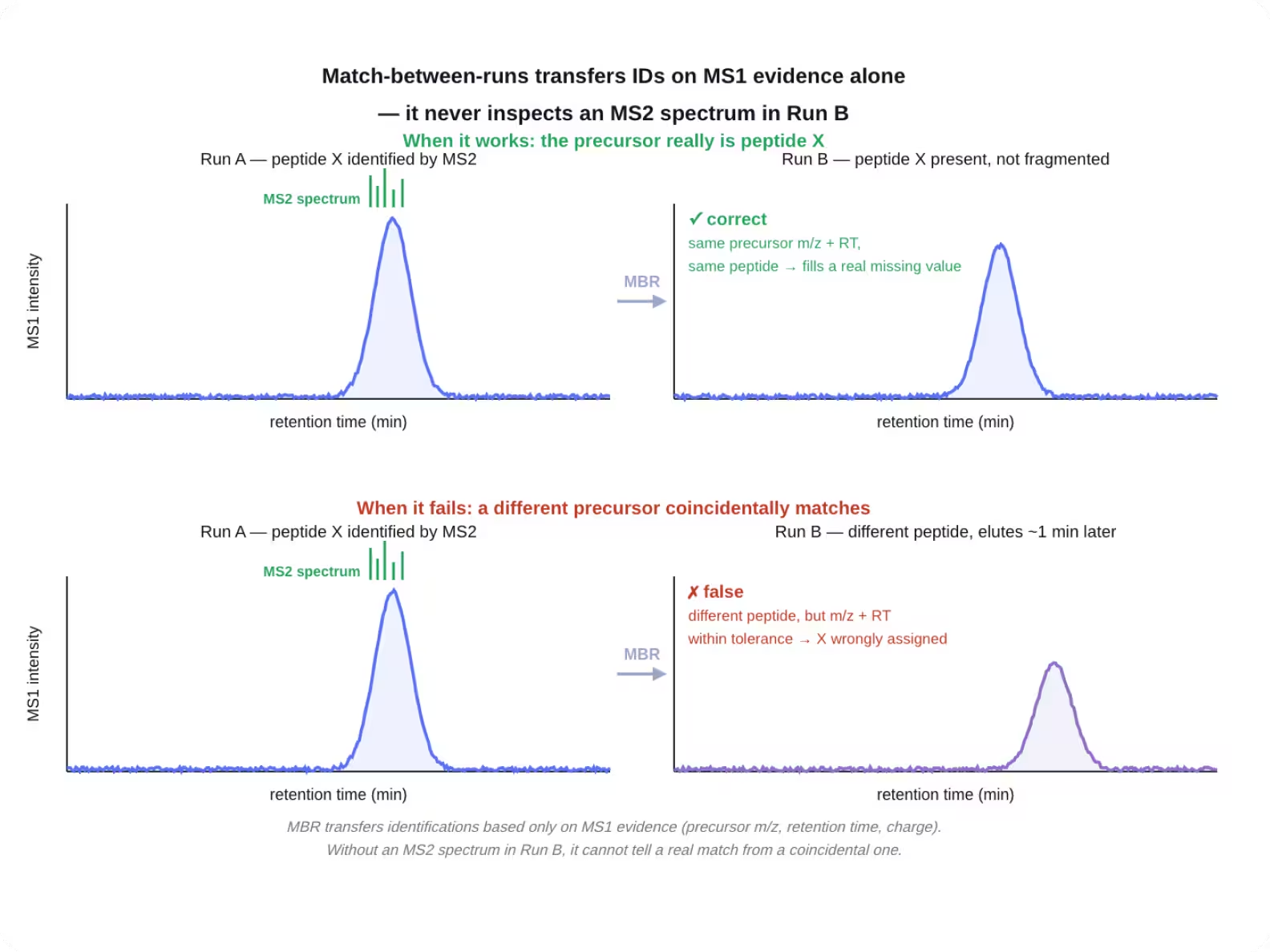
There's one more way a search engine can report more identifications without improving its underlying score: it can copy identifications from one sample to another. This technique is called match-between-runs (MBR), and it's enabled by default in several widely used tools.
MBR fills gaps by transferring the identity from a run where fragmentation happened to other runs where the precursor mass and retention time match. It can be useful — reducing missing values in quantitative data is genuinely valuable. But there's a catch.
The FDR you controlled was for identifications made by fragmentation. A transferred identification was never fragmented in the run it lands in — it was inferred from a mass and retention time match, and those matches can be wrong. A controlled experiment in the Journal of Proteome Research found that MBR raised identifications by ~40%, but 44% of all transferred identifications in yeast-free samples were false transfers.
The 12–68% more peptides Tesorai reports cannot be coming from MBR — because we don't use it. Every extra identification is independently supported by real spectral evidence.
We say "yet" deliberately. MBR done properly — with its own false-transfer-rate control — is something we may add in the future. Until then, we prefer results where every peptide stands on its own evidence.
Full technical post: Why we don’t match between runs (yet)
How does protein inference work?
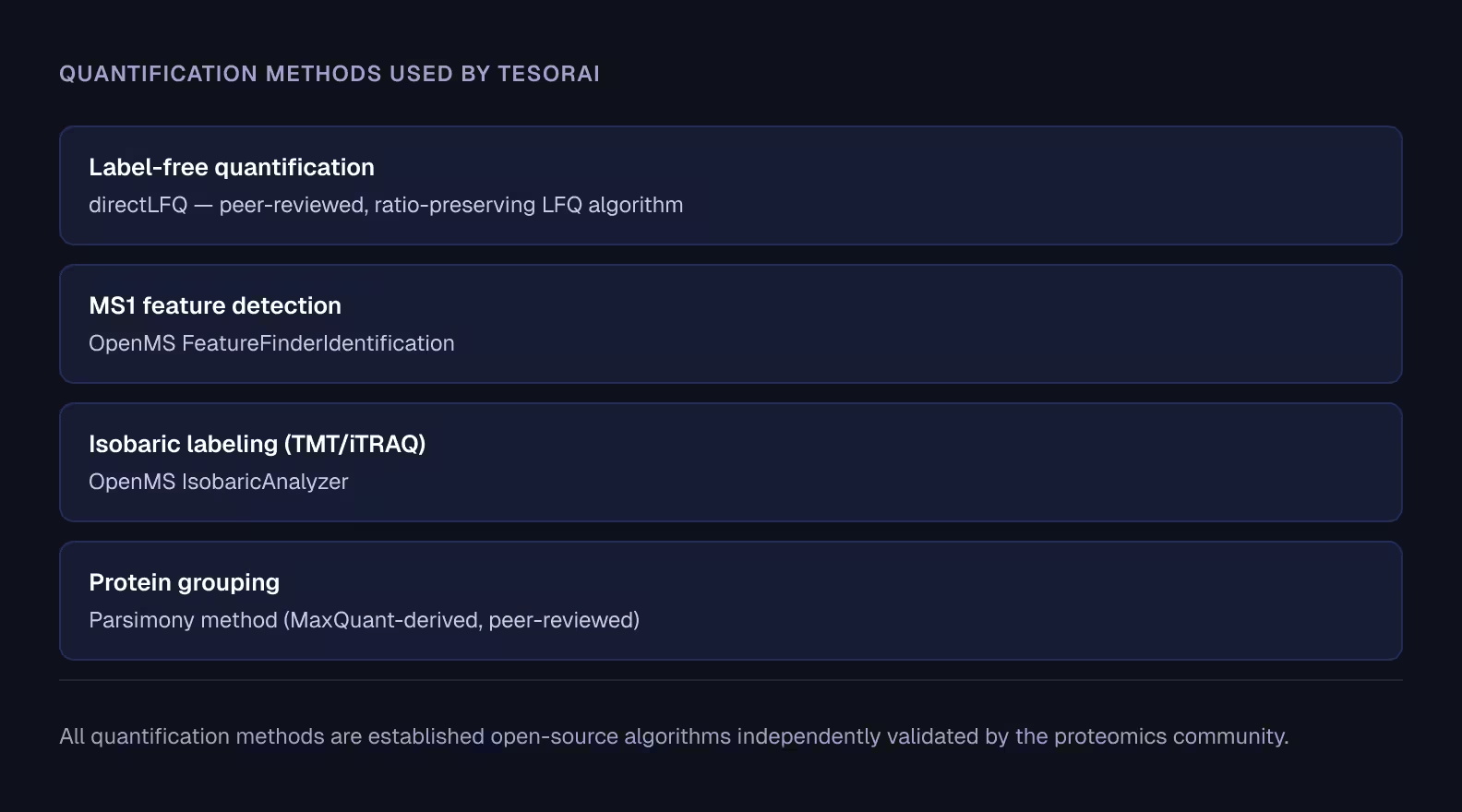
Standard, peer-reviewed methods for rolling up peptides to proteins. The gains come from better inputs — not novel quantification tricks.
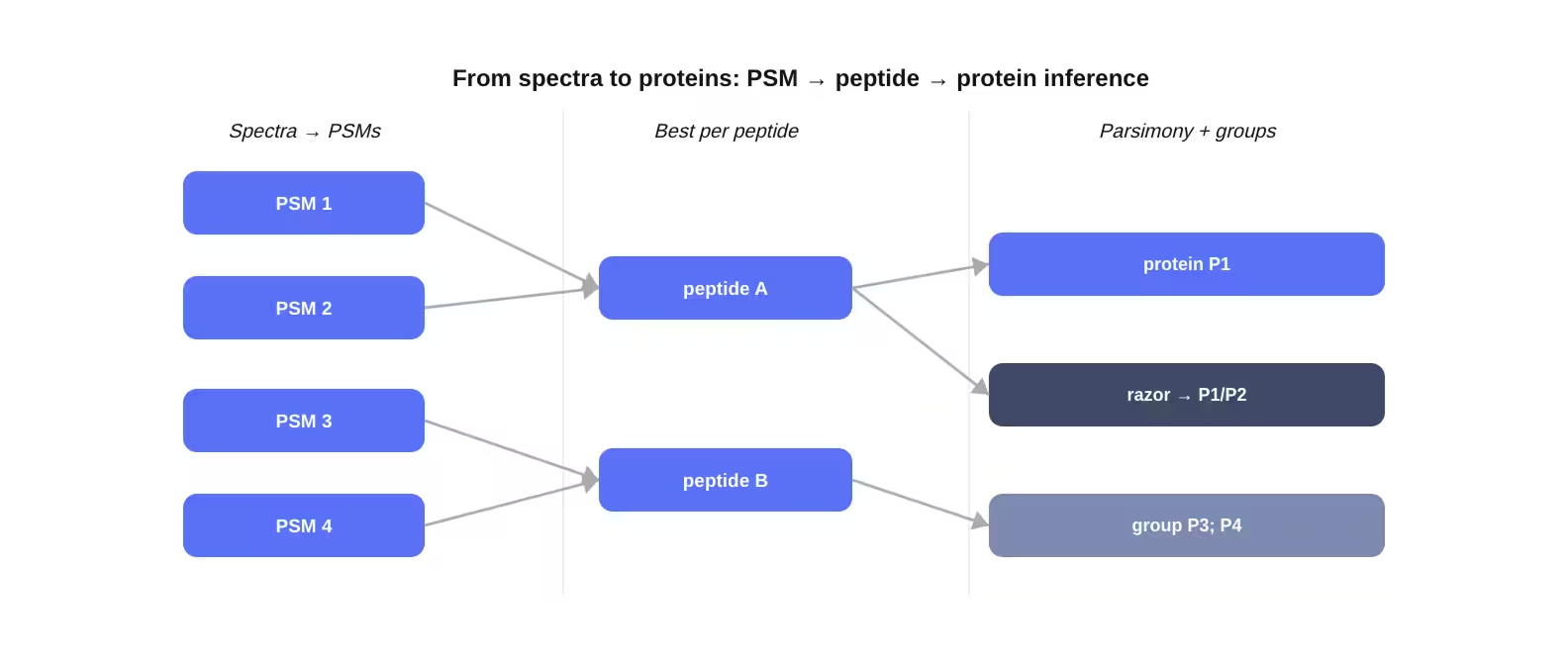
Identifying a peptide is not the same as identifying a protein. Many peptides appear in more than one protein — shared across isoforms, related family members, or similar sequences. Getting this step right matters as much as the identification itself.
Tesorai Search handles protein inference with a standard parsimony approach: report the smallest set of proteins that explains all the observed peptides. Shared peptides are assigned to whichever protein already has the most independent evidence. Proteins that are truly indistinguishable — supported by exactly the same set of peptides — are reported together as a group.
None of this is novel, and that's deliberate. These methods go back to the original MaxQuant protein inference model and are well understood by the field. We use them because they are correct, not because they produce more impressive numbers.
The same principle applies to quantification. For label-free experiments we use directLFQ; for MS1 feature intensities, OpenMS FeatureFinderIdentification; for isobaric labeling (TMT/iTRAQ), OpenMS IsobaricAnalyzer. These are established, independently validated methods.
The practical consequence: more peptides clearing FDR means more peptides anchoring each protein, which means more proteins both identified and quantifiable — without any changes to the quantification math itself.
Full technical post: From spectra to proteins to abundances
See how Tesorai Search compares
More from
Scientific Validation


.svg)

.svg)
Insights leveraging every byte of raw data